

Law firms get real inquiries from social media when their content answers common legal questions, reflects real-world experience, builds trust over time, and clearly explains what someone should do next. This is the foundation of effective social media management for law firms—using educational posts, short videos, and client-focused explanations paired with clear but low-pressure calls to action. When content stays relevant and consistent, it performs far better than generic promotions or posting just for the sake of visibility.
Why Social Media Matters for Law Firms Today
People no longer call a lawyer the moment they have a legal problem. They Google and scroll. They check reviews. Then they visit social media to see if a firm feels credible and approachable. Many of those users also visit a firm’s website before reaching out, which is why website design plays a direct role in turning social interest into consultations.
Social media is not about going viral for law firms. It is about being visible at the exact moment someone is unsure, stressed, or searching for guidance. When your posts answer the same questions your intake team hears every day, you shorten the decision process. This is why many firms rely on structured social media management for law firms instead of posting inconsistently or without a plan.
That is where social media management for law firms becomes less about posting graphics and more about building trust at scale.
At Social Booster Marketing, we see one pattern repeat across practice areas: firms that educate consistently get better inquiries than firms that only promote themselves.
What “Real Inquiries” Actually Mean for Law Firms
A real inquiry is not a random message asking for free advice with no follow-up. It usually has three signs:
- The person understands what you do
- They feel comfortable reaching out
- They are already problem-aware
Your social media content should prepare people before they contact you. That way, when they do reach out, conversations are faster, clearer, and more qualified.
The Biggest Mistake Law Firms Make on Social Media
Most law firms post like advertisers, not advisors.
Common issues include:
- Posting only firm achievements
- Sharing generic legal quotes
- Copying content from competitors
- Using legal jargon without context
People don’t follow law firms to admire credentials. They follow to understand their situation and feel reassured. Your content should sound like the first five minutes of a consultation, not a brochure.
Content That Actually Drives Legal Inquiries
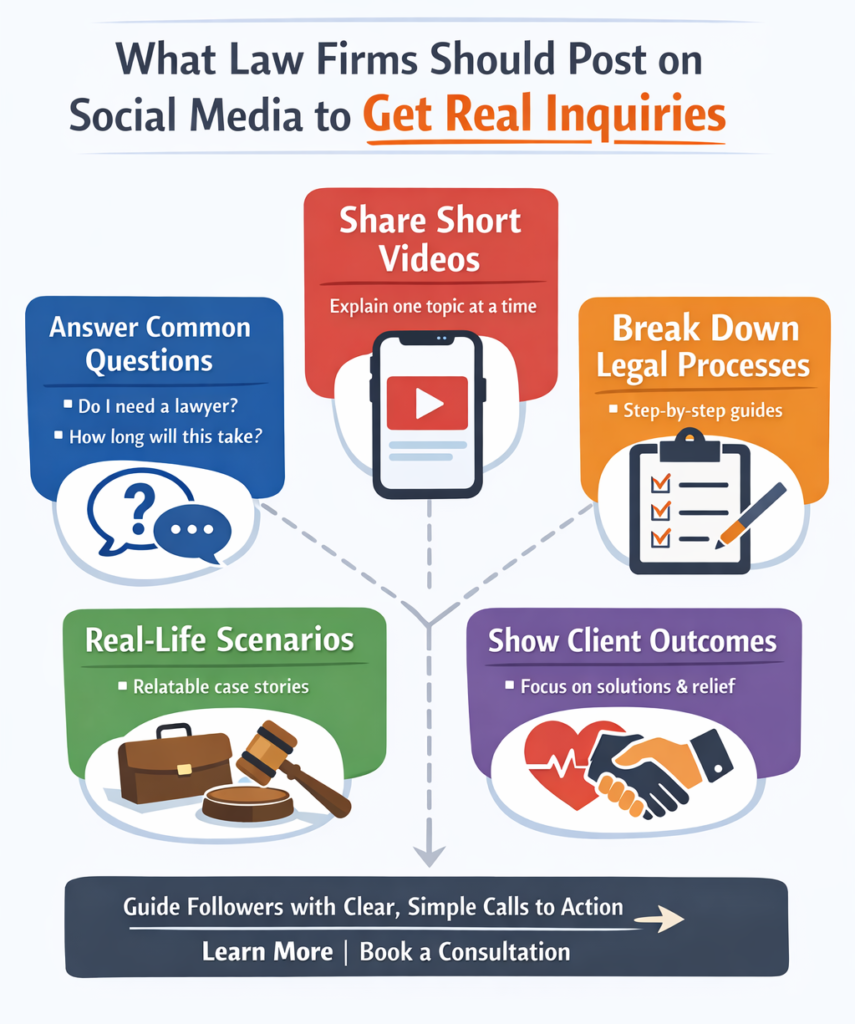
1. Answer the Questions Clients Ask Every Day
Your intake calls already tell you what to post.
Questions like:
- “Do I really need a lawyer for this?”
- “What happens if I wait?”
- “How long does this process take?”
- “What mistakes should I avoid?”
Turn one question into one post. Explain it simply. Avoid legal language unless you explain it right after. These posts perform well because they match real search intent.
This type of content strengthens social media management for law firms by aligning posts with how people think, not how lawyers speak.
2. Short Educational Videos (Without Being Salesy)
Video builds trust faster than text, especially for sensitive legal matters. You do not need studio production. A clear explanation filmed on your phone works fine.
Effective video topics include:
- One common mistake people make before hiring a lawyer
- What happens after someone files a claim
- What a consultation usually covers
- What clients should prepare before calling
The goal is not perfection. The goal is clarity. People want to see who they may speak with and whether they feel comfortable.
3. Explain Legal Processes Step by Step
Legal processes feel intimidating because people don’t know what comes next. Break that uncertainty.
Posts that outline timelines, stages, or expectations help reduce fear. When people understand the process, they are more likely to reach out.
This also positions your firm as experienced and transparent, which supports E-E-A-T signals for both users and search engines.
4. Use Real-World Scenarios (Without Sharing Confidential Details)
Instead of abstract explanations, frame content around situations.
For example:
- “If you were injured at work and waited three months…”
- “If you received a notice but ignored it…”
- “If the other party refuses to respond…”
This style mirrors how people think and search. It also works well with AI-driven search tools that rely on conversational language.
5. Share Client-Focused Wins, Not Just Case Results
You do not need to post dollar amounts or legal jargon. Focus on outcomes and relief.
Talk about:
- Problems clients were facing
- How guidance helped them move forward
- What they learned from the process
This keeps content human and relatable without crossing ethical boundaries.
One Proven Content Mix That Works Well
Here is a simple posting mix many firms use successfully:
- Educational posts answering common legal questions
- Short videos explaining one concept at a time
- Process breakdowns that reduce confusion
- Trust-building posts showing experience and approach
- Soft calls to action guiding people to learn more or book a consultation
This mix keeps your feed useful without overwhelming followers.
How Often Should Law Firms Post?
Consistency beats volume.
Two to three quality posts per week are enough if they are relevant and clear. Posting daily with low-value content does not help. Each post should have a purpose: educate, clarify, or reassure.
This is where structured social media management for law firms makes a difference. Planning content around real questions keeps posting sustainable.
Writing Captions That Encourage Action (Without Pressure)
Avoid aggressive language. Instead of telling people to “call now,” guide them gently.
Effective caption styles include:
- “If this situation sounds familiar, it may help to speak with a legal professional.”
- “This is one of the most common questions we hear during consultations.”
- “If you want to understand your options, learning more is a good next step.”
These phrases invite action without forcing it.
Where AI Fits Into Law Firm Social Media (Used Properly)
AI can support planning, content ideas, and scheduling, but it should not replace legal insight or experience.
When used responsibly, AI Digital Marketing for Law Firms helps with:
- Identifying trending legal questions
- Improving content consistency
- Testing post formats
- Saving time on drafts
Human review is still essential. Your audience can tell when content lacks real understanding.
Automation also helps law firms stay consistent across channels without adding workload, which is why many firms explore ways to automate marketing with AI technology.
Should Law Firms Use Paid Social Media Ads?
Organic content builds trust. Paid ads create reach. Together, they work better.
For firms running paid campaigns, working with a Meta Ads Agency for Law Firms helps avoid wasted spend. Ads should amplify helpful content, not push cold sales messages.
Educational ads explaining a common issue often convert better than direct promotions.
Tracking What Actually Works
Do not focus only on likes or followers. Track:
- Messages that reference a post
- Consultation requests after specific content
- Comments asking follow-up questions
- Website visits from social platforms
These signals matter more than vanity metrics.To ensure inquiries do not fall through the cracks, some firms use funnels for law firms with AI intake systems to respond quickly and route leads efficiently.
Common Practice-Area Content Ideas
Different practice areas need different angles, but the core principle stays the same: answer real concerns.
Family law often performs well with reassurance and clarity. Personal injury content works best when explaining the next steps. Business law audiences value timelines and risk explanations. Criminal defence content benefits from calm, factual guidance.
How Social Media Supports SEO and Local Visibility
Helpful social content often appears in branded searches and AI-generated answers. When posts reflect real questions and clear explanations, they reinforce authority across platforms.
Reviews often confirm that trust plays a major role before someone decides to contact a law firm, especially when they are comparing options locally. This is why a Google review management service is essential for law firm local SEO and for reinforcing the credibility your social content helps build.
Consistent posting supports your overall visibility strategy, especially when paired with structured social media management for law firms focused on user intent. Once users click through from social media, a clear and professional website experience becomes critical, which is why many firms pair content strategy with a dedicated law firm website design agency.
When to Ask for Help Managing Law Firm Social Media
If posting feels rushed, inconsistent, or stressful, that usually shows in the content. Many firms choose support not because they lack ideas, but because they want clarity, structure, and compliance.
Social Booster Marketing works with law firms that want content built around real inquiries, not trends.
If your goal is fewer time-wasters and more meaningful conversations, improving your content strategy is a strong first step.
Structured systems like the SmartCase™ AI Growth Framework for Law Firms help align content, intake, and follow-up so social media supports real business growth.
If you want to explore how a structured content plan could support your firm’s goals, you can book a strategy session or reach out through our site.
Final Takeaway
Law firms do not need flashy posts to get inquiries. They need clear answers, consistent guidance, and content that respects where people are in their decision process.
When social media feels like a helpful conversation instead of an advertisement, inquiries follow naturally.
Firms that focus on education and trust-building often see stronger, more qualified conversations over time because potential clients already feel informed and confident. This approach supports long-term growth by aligning content with real client concerns rather than short-term visibility goals.
That is the difference between posting for visibility and posting with purpose — and that is what effective social media management for law firms is really about. If your firm wants a clearer strategy that turns content into real conversations, Social Booster Marketing can help.
Contact us at (786) 756-6350 to learn more. And follow us on Facebook , Instagram , LinkedIn.
Frequently Asked Questions
1. What type of social media posts bring real inquiries for law firms?
Posts that answer common legal questions and explain real situations perform best. They help people feel informed and confident enough to reach out.
2. How often should a law firm post on social media to see results?
Posting two to three times per week is usually enough. Consistency matters more than posting every day.
3. Can educational social media content actually lead to new clients?
Yes, because it builds trust before someone contacts the firm. People often reach out after seeing helpful content over time.4. Should law firms focus on local topics in their social media content?
Yes, local content increases relevance for nearby clients. It also improves visibility for location-based searches.